

The real deal
Visual representations of unregistered rights played a central role, writes Sarah Brooks. BL O/569/19, Real Pet Food Company (Opposition), UK IPO, 26th September 2019

This comment concerns the consolidation of two opposition proceedings before the UK IPO. In the first, VIP Topco PTY Ltd (VIP) applied to register a logo for REAL PET FOOD COMPANY. The Real Petfood Company (Real) opposed the application on the basis of s5(4)(a) of the Trade Marks Act 1994 (the Act) relying on its unregistered rights in the signs THE REAL Petfood COMPANY and a logo. Real claimed to have been using the signs throughout the UK since at least 2000 for foodstuffs for animals and related goods, and advertising, marketing and promotion services in relation to these goods.
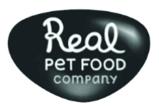
In the second, Inspired Pet Nutrition Ltd (Inspired) applied to register THE REAL PETFOOD COMPANY as a trade mark for goods including foodstuffs for animals, advertising services, wholesale and retail services relating to foodstuffs for animals and business management and related services. VIP opposed that application based on s5(2)(b) relying on its earlier UKTM and EUTM applications for the REAL PETFOOD COMPANY logo and on the basis of s3(1)(b) and s3(1)(c) of the Act. Both the UK mark and EUTM relied on by VIP were under opposition by Real.
First proceedings

Here, a dispute arose over the depiction of the unregistered rights relied on by Real.
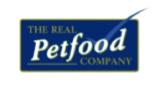
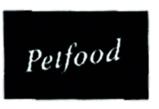
Its notice of opposition relied on THE REAL Petfood COMPANY and the black logo. Real’s skeleton arguments referred to the blue logo and THE REAL PETFOOD COMPANY. Given that it had not sought to amend its pleadings or to clarify the sign that it was relying on, the opposition proceeded only on the basis of the word mark.
VIP also challenged Real’s eligibility to oppose its application, given the relationship between Real and Inspired. Inspired had taken a majority shareholding in Real in 2008 and, in 2015, Real became a wholly-owned subsidiary of Inspired. Under a licence agreement between the companies, the goodwill remained with Real, but Inspired owned the overall rights. The Tribunal accepted that Real owned the goodwill and was the correct entity to bring the opposition.
Assessing the evidence, the Tribunal concluded that Real’s “goodwill rests in pet food snacks, treats and manufacture, retail and wholesale of the same”. However, Real had not produced evidence of advertising to third parties, so the opposition succeeded against all goods and services in VIP’s application except for “advertising and promotional services”.
Second proceedings
VIP’s UK mark could now only be relied upon for advertising and promotional services. The Tribunal held that there were sufficient visual differences between THE REAL PETFOOD COMPANY and VIP’s EU application to avoid direct confusion. However, there was a likelihood of indirect confusion for class 31 (“foodstuffs for animals; edible treats for animals”) and class 35 (“advertising, wholesale and retail services relating to foodstuffs for animals, edible treats for animals”). The opposition failed in respect of “business management; business administration; office functions” where there was no similarity of services.
Finally, as “real” was not a characteristic of pet food, the mark was held not to be descriptive.
The decision in the second proceedings is provisional, pending the outcome of opposition proceedings before the EUIPO against VIP’s EUTM application.
Key points
- When relying on unregistered rights, ensure that signs are accurately depicted in the notice of opposition and consistently referred to throughout the proceedings
- Ensure that changes in ownership of trade mark rights and related goodwill are accurately documented, via assignment and licence agreements
More case comments:

Licence to bill
A Court of Appeal decision may transform licence registration from an administrative afterthought into a key part of trade mark enforcement strategy, writes Richard Ferguson. [2026] EWCA Civ 583, Lifestyle Equities CV & Anor v Frasers Group Trading Ltd.

The real price of superfakes
Jessica des Landes considers how this LVMH case might impact luxury brands in a rapidly evolving counterfeits market. [2026] EWHC 1703 (IPEC), Fendi Italia SRL & Ors v Rolo Fashion Ltd & Anor.

A balancing act
A high threshold must be met before communications can be restrained as unjustified threats, finds Maya Muchemwa. [2026] EWCA Civ 532, Bargain Busting Ltd v Shenzhen SKE Technology Co Ltd.

The mouse that wouldn’t stay quiet
A slogan registered to celebrate the expiry of copyright on early Mickey Mouse imagery did not amuse Disney, and the trade mark was refused, writes Robert B Franks. R 201/2026-1, Karl Erik Dahl v Disney Enterprises, Inc, EUIPO First Board of Appeal.
Author
-

Sarah Brooks
Trade Mark Attorney, D Young & Co LLP