

Back to the future: the past, present & future of trade mark administrators
From battling paper mountains and fax machines to leading AI-driven workflow transformation, the trade mark paralegal role has changed significantly in the 21st century. What’s next?
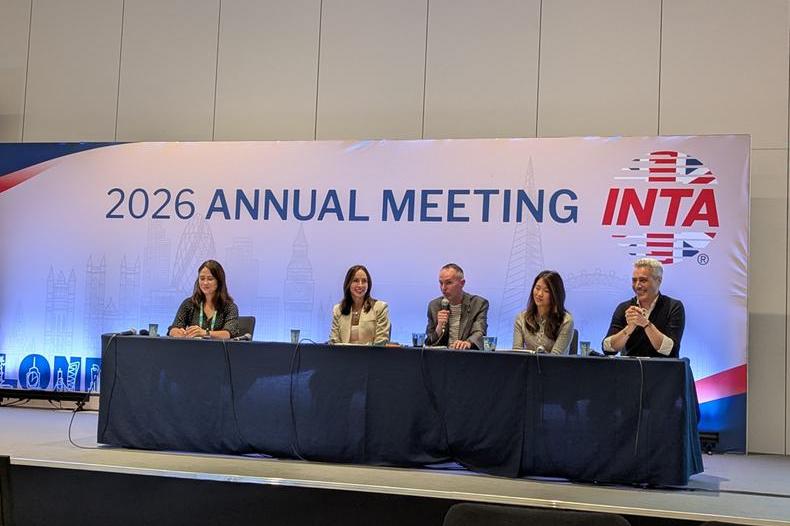
“The future is what you make it, so make it a good one.” Kathleen Jose, Senior Trademark Program Manager at Uber, borrowed this quote from the iconic Eighties movie Back to the Future as she chaired a panel of experienced TMAs exploring the rapid evolution of the role, during the recent INTA Annual Meeting.
Kathleen was joined by CITMA President Daniel Hardman-Smart, Diane Lau, Trademark Program Lead at Meta Platforms Inc., Mark McVicar, Senior Adviser, Trademark and Brand Strategy, Eiger, and Carly Regan, Global IP Operations and Brand Enforcement at Stripe.
The past: paper, more paper, and fax machines
The panel noted that TMAs have come a long way since the USPTO Gazette was a heavy hard-copy book that they pored over with a highlighter pen, looking for marks that might be confusingly similar. Paper overload was standard, with physical files stacked around the walls of office cubicles resembling a fortress.
Electronic filing was far in the future. The closest equivalent was the fax machine, which Dan Hardman-Smart remembers well, saying: “The feeling of elation when you managed to get a fax through to a faraway country was incredible!”
TMA career progression tended to depend on your immediate superior's retirement. Even in organisations that promoted paralegal advancement, there was often reluctance to lose the support function they relied on. Dan notes: “In the UK, there was no clear path. TMA was a ‘seen and not heard’ role […] managers didn’t know how to replace you, so they kept you there.”
This changed in 1998 when CITMA introduced the Formalities course, which is now the CITMA Paralegal Course. This was a world-first, offering an opportunity to get qualifications recognising the skills required in the TMA role.
The present: ai adoption, skill diversification and mental health impacts
Today, trade mark teams are striving to extract value from AI. Meta’s Diane Lau uses it daily, responding to a corporate mandate to rethink productivity and problem-solving through AI. From building internal agents that interrogate portfolio data to provide fast answers, to analysing trade mark search results in the context of the company’s risk framework and converting the outcome into business-friendly communications, AI is becoming “truly foundational” to how she works.
The core TMA skillset must develop in parallel with AI advances. Strong cross-functional communication will become increasingly important as TMAs engage with a wider range of stakeholders. Knowing your audience and presenting information in a way they understand will be crucial.
Systems thinking is also essential. By understanding the broader market, financial, and legal positions, TMAs can provide nuanced advice while eliminating activities that don’t add value.
Dan cautioned that the pace of AI output is driving an always-on culture where clients expect instant results 24/7. TMAs, serving as the essential human-in-the-loop in AI workflows, will face intense pressure to operate at machine speed, which could lead to adverse mental health effects. “Conversations about AI tend to focus on how brilliant it is,” he says, “but no one is really talking about the impact it is having on us being humans.”
The future: automation, ai engineering, and futureproofing TMA careers
Many trade mark management processes will be automated in the short- to medium-term. As a result, the role will be less execution-focused and more outcomes-based as it evolves into legal product management. TMAs will need a balance of strong technology skills and legal acumen as their role becomes a vital bridge between engineering teams and the legal department.
The TMA role will evolve into a cross-functional, multidisciplinary activity that adds value to marketing teams, technology development, and product management. In such a diverse and fast-changing environment, the panel advised TMAs to develop their career around their own interests, whether that is business development, technology, marketing, or a unique feature of the firm that they can lean into.
To prepare for the future, TMAs should embrace AI, be curious and open-minded about technology, and build a reputation as an expert in what is coming next.
Daniel summed up the road ahead, saying: “The tech we see today won’t be the same in five years’ time, but you can be at the forefront of what actually works!”