

Microphone appeal heard
But the final word was given to the Examiner, explains Chris Thomas. R 2630/2019-4, Logitech Europe SA v Fourth Board of Appeal, EUIPO, 3rd July 2020

On 7th January 2019, Logitech Europe SA (Logitech) applied to register a 3D mark in class 9 for “microphones”. The Examiner refused the Application under Article 7(1)(b) EUTMR on the basis that the mark consisted of a combination of presentational features typical of the shape or appearance of a spherical microphone head with visible parts.
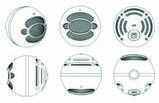
The sign was held not to be markedly different from basic shapes commonly used in trade. At the time of writing, a claim that the mark had acquired distinctiveness through use under Article 7(3) was yet to be examined.
Logitech appealed, maintaining that the Examiner had failed to assess evidence that showed that the sign was a significant departure from the norm.
Key principles
The Board of Appeal (BoA) summarised several key principles in relation to the assessment of 3D marks, following established case law. These included the fact that:
- For a mark to possess distinctive character under Article 7(1)(b), it must serve to identify the goods and services as originating from a particular undertaking;
- The average consumer must be able to distinguish the goods without conducting an analytical or comparative examination and without paying particular attention;
- The more closely the mark resembles the shape taken by the product, the greater the likelihood of the mark being devoid of distinctive character; and
- A feature displayed in a 3D mark which is functional will generally not confer distinctiveness as it will be associated with that function for the purposes of Article 7(1)(b).
The BoA held that supporting statements from individuals in the industry who were familiar with the microphone shapes did not mean that the mark enabled goods to be distinguished from those of undertakings from the perspective of the average consumer.
The Applicant’s position that the shape of the microphone was a significant departure from the norm was not borne out by its evidence. For example, the ball shape served a necessary function as a receptable for mechanical/electronic components, while the grid shape was influenced by the spherical shape of the microphone head and did not confer distinctive character on the sign. Accordingly, the appeal failed and the case was referred to the Examiner to examine the Article 7(3) claim.
Public interest at play
The CJEU and General Court have consistently held that there is a public interest in barring registration for 3D shapes where a trade mark extends beyond the essential function of distinguishing goods and moves towards monopolising the shape of certain goods, technical functions of goods, or goods with an aesthetic value.1
Even where Article 7(1)(e) exclusions are not applied, unless the shape of a mark significantly departs from the norm for shapes commonly used in trade for the goods of the application, it will not be capable of distinguishing the goods of an undertaking and will not fulfil the essential function of a trade mark for the purposes of Article 7(1)(b).
However, if Logitech succeeds in demonstrating that the mark has acquired distinctiveness under Article 7(3), it is open to the Examiner to reconsider the application under Article 7(1)(e).2
Key points
- 3D marks risk being refused under Article 7(1)(b) even if Article 7(1)(e) exclusions do not apply
- The shape of a mark must significantly depart from the norm for shapes commonly used in trade in order to be registrable
- Statements from industry experts familiar with a shape might not assist with proving inherent distinctiveness from the point of view of the average consumer
1 C-299/99, Phillips v Remington; C321/03 Dyson v Registrar; C-102/07 Adidas v Marca Mode; T-508/08 Bang & Olufsen v OHIM; T-205/13, Hauck GmbH v Stokke A/S
2 T-508/08, Bang & Olufsen
More case comments:

Saving soles
This dispute was not easy to resolve, writes Samuel O’Toole, but the IPEC ruled that confusion was unlikely for these two marks. [2026] EWHC 767 (IPEC), easyGroup Ltd v Easyfeetstore OÜ & Ors.

The short answer
The Court of Appeal ruled that a video-sharing platform’s name was clearly descriptive and did not infringe a film company’s trade mark, writes Celia Tao. The Court of Appeal ruled that a video-sharing platform’s name was clearly descriptive and did not infringe a film company’s trade mark, writes Celia Tao.

Orwell before the Grand Board
Can the title of a novel become a registered trade mark? In the case of two of George Orwell’s famous works, only up to a point, writes Luke Ingleton. R 1719/2019-G Animal Farm & R 1922/2019-G 1984, EUIPO Grand Board of Appeal.

How easy can it be?
Saaira Gill reviews four recent decisions on revocation actions filed against marks containing a certain descriptive word. O/0345/26 Kilburn & Strode LLP v Tubeway (Sales) Ltd; O/0341/26 Kilburn & Strode LLP v Omnicell GmbH; O/0440/26 Kilburn & Strode LLP v Lascar Electronics Ltd; O/0421/26 Kilburn & Strode LLP v Easibathe Ltd.