

Beyond the wrapper: can a product shape be a trade mark?
Chartered Trade Mark Attorney, Craig Beaumont explores the wonderful world of product shapes, looking at a recent case between Toblerone owner, Mondelēz and British vegan chocolate brand, Catherine’s Originals.
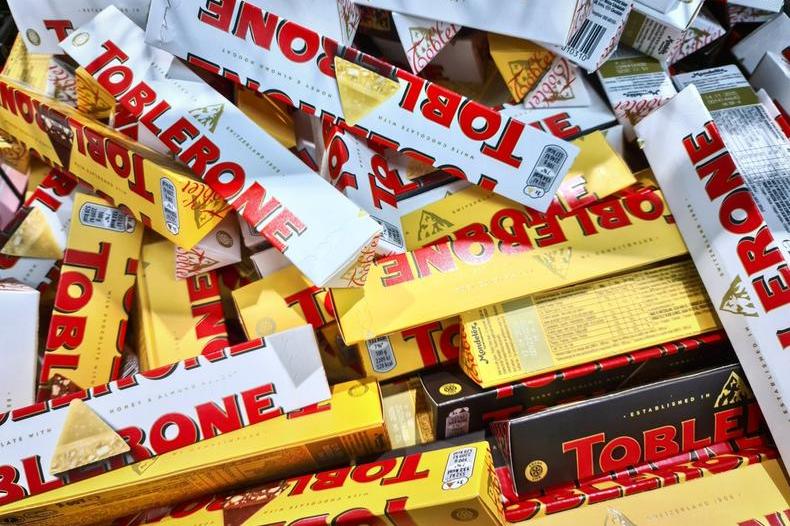
There are few chocolate bars recognisable by their silhouette alone. Toblerone is probably one of them.
That widely recognised shape is now at the heart of a new dispute. Mondelēz, the owner of Toblerone, has brought proceedings against British vegan chocolate maker, Catherine’s Originals over its O’bar, alleging trade mark infringement and passing off.
The O’bar is also a long chocolate bar divided into a series of raised sections. There is, however, an obvious difference: O’bar’s sections are rounded, while Toblerone is famous for its triangular peaks. Catherine’s Originals says the O’bar shape represents the “O” in “Originals” and denies the allegations.
However, that may be too easy a comparison. Look at the way O’bar is sometimes presented, and it gets more interesting. The wrapper covers the lower part of the chocolate, leaving a row of narrower projections visible above it. From that angle, the silhouette looks more pointed. You see less of the rounded shape of the complete sections.
Then you look down at the wrapper. There is an argument for the other side. A large, rounded “O” forms part of the O’bar branding, which fits with Catherine’s Originals’ explanation for the shape.
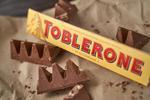
So which impression matters? There isn't one snapshot that provides the answer. The starting point is the Toblerone shape as it is actually registered, compared with the sign Catherine’s Originals is using. How consumers encounter that sign in the real world can then become part of the picture.
And before getting that far, there is a more basic question: when does the shape of a product become something trade mark law will protect?
So, can you trade mark the shape of a chocolate bar?
Perhaps surprisingly, a trade mark does not have to be a name or a logo. The shape of a product can itself be registered.
But being unusual, memorable or even famous is not necessarily enough. The shape still needs to do the job of a trade mark, helping consumers identify where the product comes from. With shapes, that is not always straightforward.
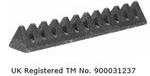
Source: UK IPO
Consumers are used to seeing a name on a wrapper and treating it as a brand. They may look at the shape of the product inside rather differently. Does the shape tell them who made it, or is it simply what the product looks like?
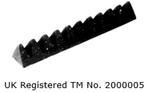
Source: UK IPO
Mondelēz has UK trade mark registrations protecting representations of the Toblerone shape, including the two shown on the right.
What is striking about those registrations is what is missing. There is no TOBLERONE name, no logo and no packaging. It is the shape of the chocolate itself that is registered.
Famous, but distinctive?
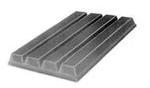
Recognise it (below)?
Source: UK IPO
Most people probably do. But KitKat’s owner, Nestlé, still failed to register the four-finger shape as a UK trade mark.
Look at it again alongside the Toblerone registrations above and perhaps that result is not quite so surprising. Four chocolate fingers separated by grooves are a fairly ordinary shape for a chocolate bar. Toblerone’s row of triangular peaks is not.
Nestlé therefore needed to prove more. Consumers had to have learned, through years of use, to see the shape itself as something that told them where the chocolate came from.
That is a finer distinction than it sounds. Show someone an unwrapped four-finger bar and they may immediately recognise a KitKat. Fine. But recognising the product is not necessarily the same as relying on the shape to tell you who made it. That difference mattered.
There was a practical difficulty as well – think about how people actually encountered KitKat. Usually in its wrapper. The chocolate was hidden and the KITKAT name was doing the obvious branding work. Shoppers weren't choosing between unwrapped four-finger bars.
Trade mark lawyers call what Nestlé was trying to prove acquired distinctiveness. A shape that starts out without enough distinctive character can, over time, become a trade mark if consumers learn to treat the shape itself as a brand.
O’bar almost turns that point on its head. Part of the chocolate is deliberately visible before the wrapper comes off.
Back to O'bar: would anyone actually be confused?
Having a registration is only half the story. How far does it actually go?
One question is whether consumers might think O’bar comes from the people behind Toblerone, or from a connected business.
That makes the way O’bar is presented, discussed above, potentially relevant. But there are plenty of differences too. O’bar is vegan, for one thing, and has its own name and branding. Shoppers may have no difficulty telling the products apart.
However, consumers may still think of Toblerone, particularly since both bars are honey & almond.
That can matter because a registered trade mark with a reputation may have protection even where consumers are not actually confused, including where a later sign takes unfair advantage of that reputation. Mondelēz has spent decades making Toblerone's unusual shape recognisable. If O’bar brings that shape to mind, there is at least a question about whether it gets any commercial benefit from the association.
Simply reminding somebody of Toblerone is not enough to prove infringement. But it shows why this isn't just a matter of deciding whether an oval looks too much like a triangle.
A lesson beyond chocolate
If you have big ambitions for a new product, these are conversations worth having early.
Registered designs are often overlooked. For a new product appearance, though, they may be the obvious first place to look. The test is quite different – design protection is concerned with the appearance of the product rather than whether consumers treat that appearance as a brand. Timing matters too. Once a design has been disclosed, various clocks can start running and the options can change.
Trade marks can be a longer game. You may not be able to register the product shape as a trade mark straight away. That doesn't necessarily mean do nothing. There may be other useful ways of protecting the product presentation while the shape and its reputation develop.
And if the long-term ambition is for the shape itself to become part of the brand, think about that with the people designing and marketing the product. How are customers actually going to encounter it? Will they see the shape in advertising and at the point of sale, or will it sit inside a box while the name and logo do all the work?
KitKat shows why that matters. Selling huge quantities of a recognisable product is not necessarily enough if consumers haven't learned to rely on the shape itself as a brand.
Ideally, the product team, marketing team and Chartered Trade Mark Attorney are having these conversations together. What can be protected now? What might become protectable later? Do customers actually see the feature you hope will become part of the brand? And what needs clearing before the product gets anywhere near the market?
By the time someone copies the product, it may already be too late to have those conversations.
Seek advice and guidance by using the the Find a Chartered Trade Mark Attorney tool.
Author
-

Craig Beaumont
Trade Mark Attorney, Barker Brettell LLP